


Sell a House That Needs Too Much Work — Without Doing Any of It First
Type “sell a house that needs too much work” into Google and look at what comes back: national blogs written by companies that have never set foot in Colorado, each one funneling you into a form that auctions your address to whichever investor pays the most for the lead. Within the hour, strangers with out-of-state area codes are calling about your roof. That’s the lead-gen business. We’re not in it.
Boulder Home Buyers is Dave Janis — a local Longmont resident who’s lived and worked in Boulder County for 20 years, with an office at 2700 Canyon Blvd in Boulder. It’s a local family business — not a call center, not a national franchise. And it exists partly because of houses exactly like yours. Over two decades here, Dave watched sellers with the county’s roughest houses get the county’s roughest treatment: buyers who threw out a big number to win the contract, chipped it down once the moving truck was booked, or stopped answering the phone a week before closing. The houses that most needed a straightforward buyer attracted the least straightforward ones. He built the other kind of company.
The calls we get sound like this: a roof that’s been dripping into a bucket in the attic since the March storms. A sewer line that backs up every time it rains hard. A ranch house out of an estate, closets still full after fifty years. A rental that a decade of tenants used hard and the numbers no longer justify fixing. A house you love that quietly slid past the point where you can keep up with it. Different stories, same question — can this house be sold the way it sits? Yes. Dave’s answer runs on the same six words the whole company runs on: get it done and keep it easy. And if our offer isn’t right for you, we’ll point you at what would be — a contractor’s bid, or a listing agent’s phone number.
“Any Condition” Is Easy to Say — Pricing It Is the Part That Takes a Builder
Every cash buyer in America says “any condition.” Almost none of them can price it. When a typical investor sees a bad roof, they call a roofer, take the retail quote, pad it thirty percent for the unknowns, and subtract the whole pile from your offer. The padding comes out of your pocket.
We don’t have to guess. Boulder Home Buyers shares a back office with Janis Development, an active Boulder County builder — the crews that reroof, replumb, rewire, and re-level houses on our own projects are the same people who walk through yours. We know what repairs cost because we write the checks. A full roof replacement on a typical Front Range house runs well into five figures — full architectural-shingle replacements in the Denver metro are commonly bid between $12,000 and $28,000. Foundation piers run roughly $1,500 to $3,000 each installed, and most repairs need four to eight of them. A collapsed sewer line is usually a $4,000-to-$13,000 excavation. A whole-house rewire runs $8,000 to $15,000 and up. Numbers like those end most retail deals. For us they’re line items.
There’s a second mechanism the national sites mention in half a sentence, and it’s the one that actually decides what your house is worth: big-ticket problems don’t just discount a house at retail — they shrink who’s allowed to buy it. Most standard insurers won’t bind a policy on an active roof leak or century-old knob-and-tube wiring. No insurance means no mortgage. No mortgage means the “just list it as-is and see” plan quietly becomes a cash-only listing — and the cash buyers circling an as-is MLS listing are mostly the national-formula kind. Understanding that math before you pick a path is worth more than any single offer. Send us the address — worst case, you’ll know exactly where you stand before you decide anything.
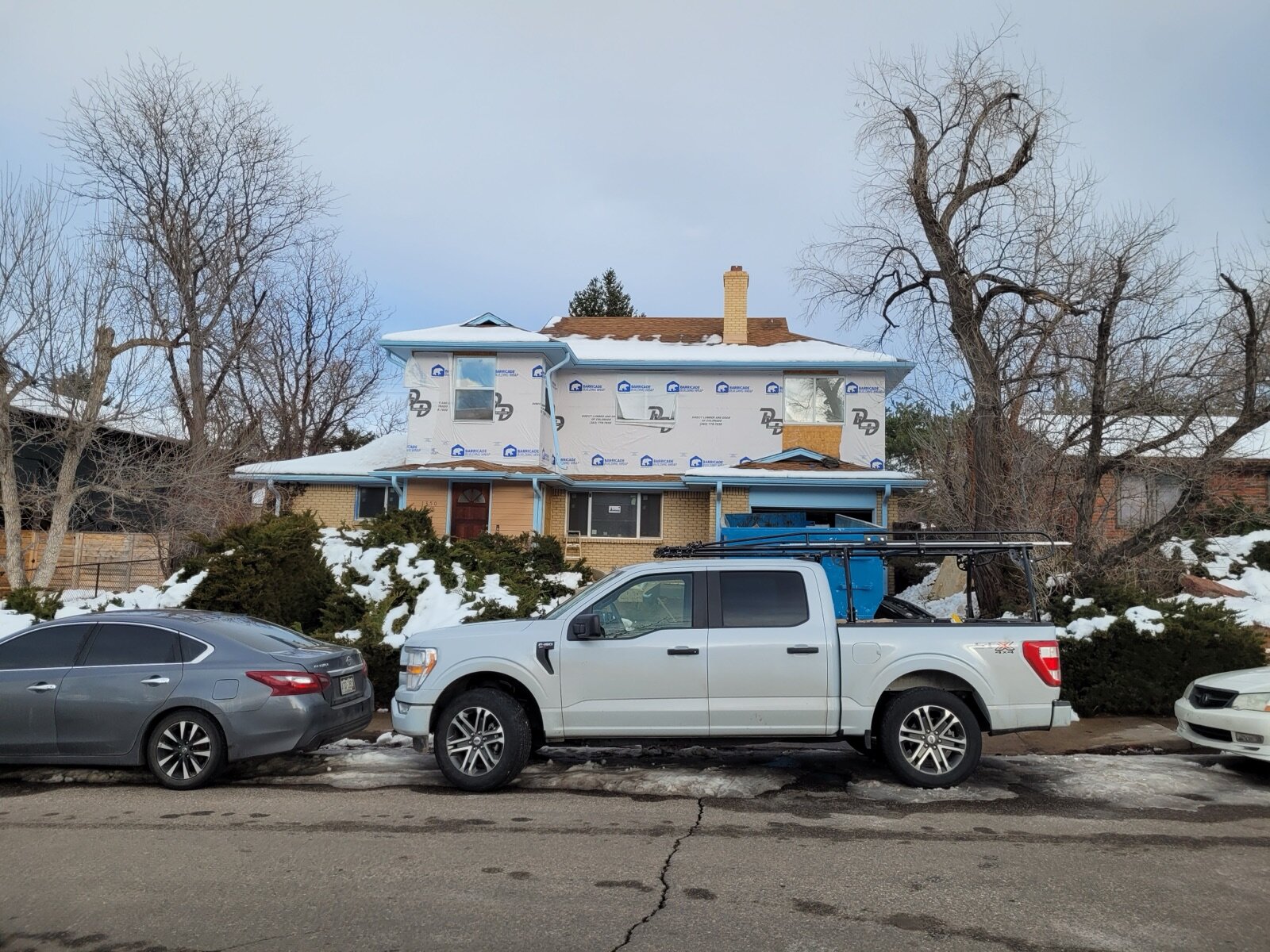
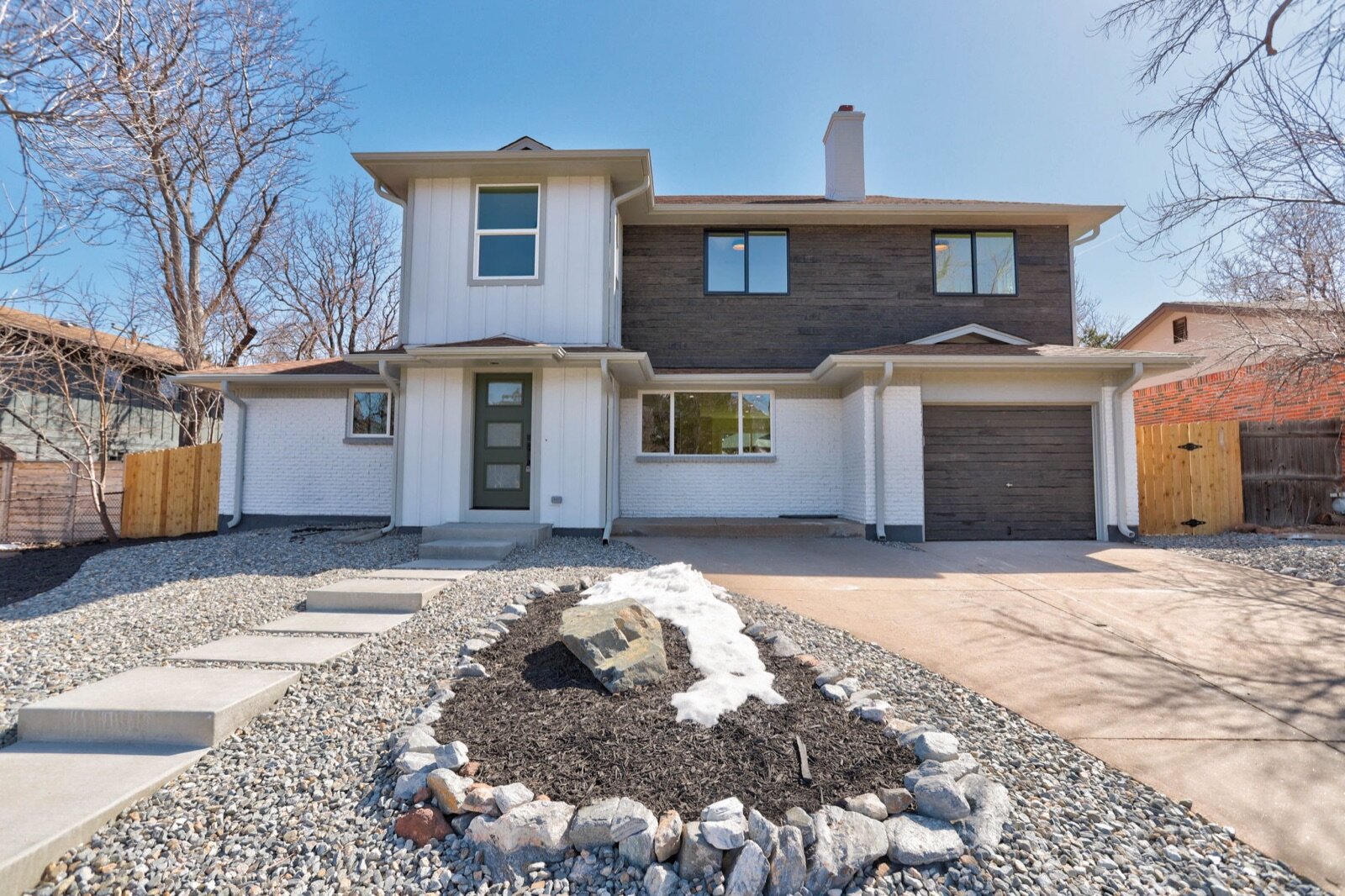
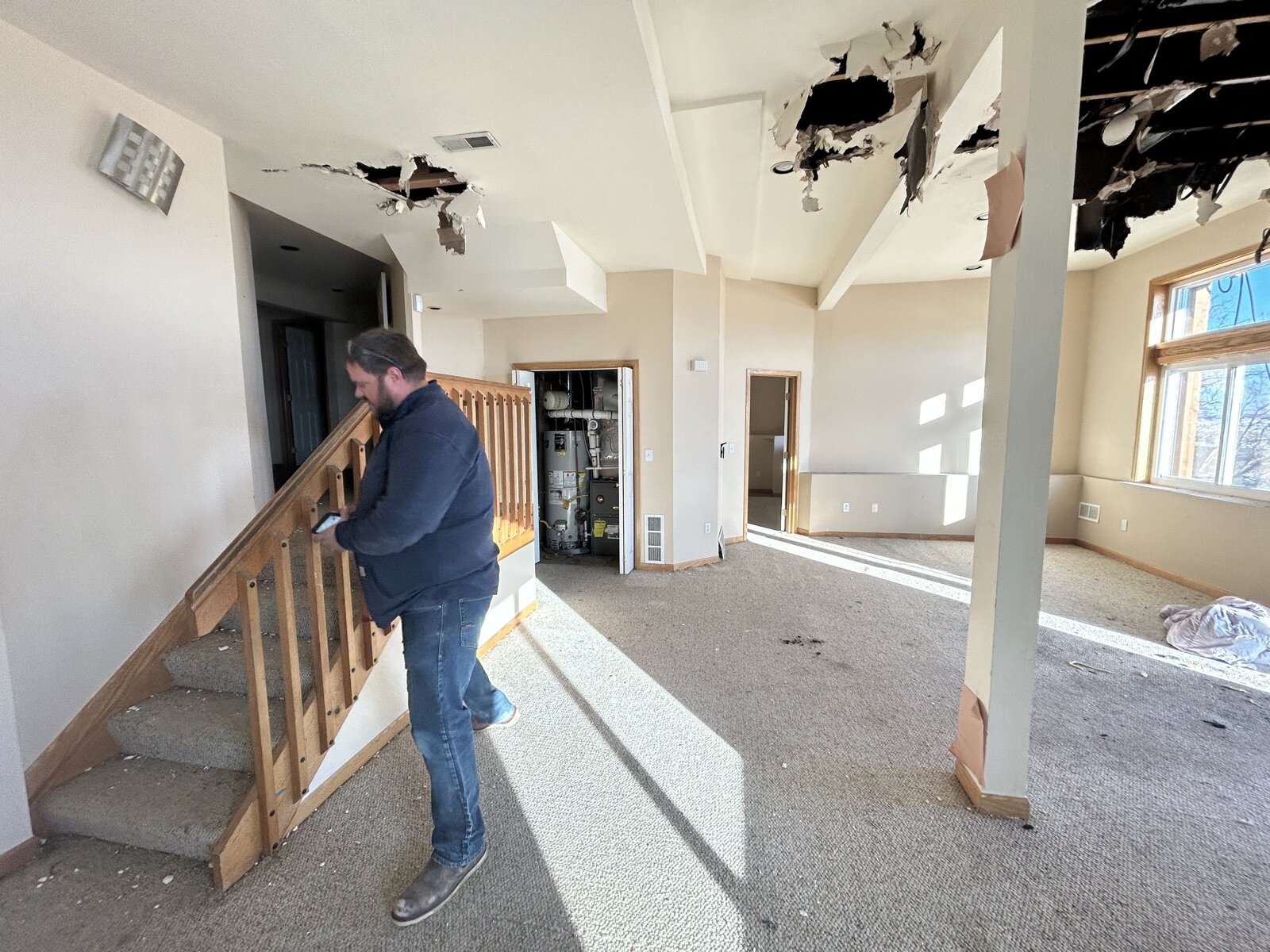

Anyone can publish the words “any condition.” The photos above are houses that actually needed the work — bought as they sat, finished by our crews. Take what you want out of yours and leave everything else where it is; once we close, the cleanout belongs to us, not you.
What “Needs Work” Means to Us
Roofs, foundations, and structural problems
Hail country is hard on roofs, and Boulder County’s postwar housing stock is reaching the age where decking sags and foundations move. Cracked slabs, bowing basement walls, doors that won’t latch anymore — we’ve bought them, priced with pier-and-beam math instead of fear. A known foundation problem can knock 10 to 20 percent off retail value, and repairing it first rarely earns the money back — buyers and appraisers treat a stabilized foundation as the baseline the house owed them, not a premium feature.
Sewer lines and septic systems
Inside city limits, the failed sewer lateral is the classic deal-killer — a $4,000-to-$13,000 dig a retail buyer will demand fixed before their lender funds, and more if the line runs deep or under concrete. Out at the county edges — Niwot, Hygiene, Gunbarrel, unincorporated ground around Lafayette and Louisville — it’s septic: Boulder County requires a SepticSmart Property Transfer Certificate before closing, meaning a licensed inspection and pump, and a failing system means either a notarized repair agreement or a replacement that typically runs $50,000 to $70,000. We buy on septic regularly and price the system with the same builder math as everything else.
Old electrical and plumbing
Knob-and-tube wiring, 60-amp panels, galvanized supply lines — the county’s 1920s-to-1960s houses are full of them. FHA and VA underwriters routinely demand a licensed electrician’s sign-off on old wiring, and many insurers restrict or refuse coverage on it entirely — which drops you straight into the cash-only trap described above. We’re direct buyers — no bank, no mortgage approval, no financing contingency — so none of it slows the closing.
Kitchens and baths stuck in another decade
Dated is not damaged, and it’s worth keeping the two separate. Harvest-gold counters and a shag-carpeted bath aren’t defects — for our crews they’re a scheduled Thursday. But be aware of the honest flip side: if your house is genuinely just dated and everything underneath works, the open market will probably beat our number — and we’ll tell you so before you’ve spent a dime. Send us the address and you’ll get a straight read on which category your house is in.
Houses that are full to the ceiling
Some houses need a dumpster before they need a contractor — decades of accumulation, a family member’s estate, a situation that got away from someone. We’ve bought them without judgment and without asking anyone to spend a weekend they don’t have. Keep what matters to you; the rest goes on our side of the ledger after closing.
Two lanes belong to their own pages: if the house was hit by a sudden event — fire, flood, major water damage — that’s covered at our damaged-house page, and if the house is past saving but the dirt under it is valuable, selling to a builder is its own conversation, and one we’re unusually equipped for. One exclusion, stated plainly: we don’t buy mountain or canyon properties — plains-side Boulder County only, and we’ll tell you quickly either way.
The Fix-It-First Math Most Sellers Run Too Late
Should you renovate before selling? Sometimes, genuinely, yes — paint, carpet, and a tidy yard on a structurally sound house in a strong pocket can return more than they cost, and a good listing agent will tell you which projects clear that bar. If your house is sound and just needs staging and a weekend of work, an agent will likely make you more money than we will, and we’ll say exactly that on the first call.
Big-ticket repairs are a different animal. You pay retail contractor quotes we’d never pay. You carry the mortgage, taxes, and insurance through months of work. You become a general contractor with no experience in the trade. And at the end, appraisers and buyers rarely hand back dollar-for-dollar on a new roof or sewer line — they treat those as things the house was supposed to have all along. That’s the trap: spending $30,000 and six months to raise the price $20,000. The side-by-side comparison shows how the two paths net out; the short version is that condition problems are exactly where the cash math gets competitive.
How It Works
1. Tell us about the house
Call or use the form. You’ll talk to a real local person about what the house needs — and you don’t have to soften it. If it might be a fit, we’ll walk it once, usually within a day or two.
2. Get a written offer within 24 hours — with the math attached
Not a verbal number, and usually not one take-it-or-leave-it figure — options tied to different timelines, with every line of the arithmetic on paper. No pressure, no expiring-tonight theatrics.
3. Pick your closing date
In as little as 3 days if you’re up against something. Most sellers land somewhere between three and six weeks, and months out is fine too. We pay standard closing costs. The full process is laid out at how we buy houses.
Where Our Number Comes From on a House That Needs Work
We start from a realistic retail figure for the house exactly as it stands, then deduct the commission that would have gone to an agent and the concessions a financed buyer’s inspector would have extracted. On most houses that inspection list is hypothetical. On yours it isn’t — and that’s precisely where our builder arm changes your outcome, because we price the roof, the piers, the sewer line at the cost Janis Development actually pays, not a padded retail quote. Every line prints on the offer itself. We show you the math.
You’ll read on national sites that cash buyers in Colorado pay “30 to 70 percent of market value.” That describes national wholesaler spreadsheets applied to houses their operators will never see. It doesn’t describe us, and the difference isn’t a slogan — it’s visible on the paper. One seller we eventually bought from had collected five offers before ours. Ours was the only one that ever existed in writing with numbers attached. The other four never made it onto paper.
As-Is Doesn’t Mean Hiding Anything
Here’s something the “as-is” blogs bury: selling as-is in Colorado changes what you’ll fix, not what you must disclose. Sellers are required to disclose known adverse material defects — the state’s Seller’s Property Disclosure form covers roof leaks, water intrusion, structural movement, plumbing, and more — and the duty covers what you actually know as of signing, including past problems you’ve since repaired. You’re not required to go investigating; you are required to be straight about what you know.
With most buyers, honesty costs you money. With us it costs you nothing, because we price the problems into the math either way — the leak you tell us about doesn’t kill the deal, it just becomes a line item you can read. One caveat, plainly: we’re not attorneys or accountants, and this isn’t legal advice — we’re glad to work alongside yours.
Whatever’s driving the sale, the house that needs work usually isn’t the whole story — it arrives attached to a foreclosure clock, a divorce, a move that came together faster than planned, an estate, or a rental you’re done with. Tell us the situation first — the right number comes out of that conversation, not ahead of it.
Case in point: a Longmont rental sat full of belongings after a bad renter moved out — see how we bought it as-is and turned it around.
What Sellers Tell Us Once the House Is Off Their Hands
“Dave was able to save us from owning a money pit. It was tenant occupied but that didn’t matter. The tenants were able to finish out their lease even with a change in ownership so it was super easy.”
a Table Mesa seller
“The house and yard always looked messy while they were there. Listing it for sale wasn’t an option with how it looked. Dave presented me with a solid offer to purchase the house and deal with all tenant relations. It was a no brainer.”
a North Boulder seller
“We had an outdated house with no desire to go through the hassle of showings, open houses, etc. Instead we opted for Boulder Home Buyers and got a fair offer fast.”
a Longmont seller
Our track record is public — read every review, good and bad, then decide.
Questions We Hear From Sellers Whose Houses Need Work
Are “we buy houses in any condition” companies legit?
Some are — and here’s how to check any buyer, including us. Ask for addresses of houses they’ve actually bought and finished nearby, so you can drive past them. Ask for the offer in writing with the math shown. Ask which local title company they close with, and call it. A real buyer passes all three without flinching; a lead reseller or a retrader fails at least one. More on vetting buyers is in our FAQ.
How much less will I get selling a house as-is for cash?
Less than a fixed-up retail sale — and often more than you’d net trying to get there. We start close to retail for the house’s current condition, subtract the commissions you’re not paying, and subtract repair costs at builder cost rather than padded retail quotes, with every line printed on the offer. Ignore the “30 to 70 percent of market value” rules of thumb on the national sites — that’s how wholesalers who will never stand in your house price their risk, not how a builder prices work.
How fast can you close on a house that needs work?
In as little as 3 days, because nothing about the condition slows us down — there’s no lender requiring repairs, no appraisal, no inspection contingency to renegotiate under. Three to six weeks is what most sellers actually choose, and further out is fine.
Do I have to repair, clean, or empty the house before closing?
No — nothing. Don’t fix the roof, don’t patch the drywall, don’t rent a dumpster. Take the things you want and walk away from the rest; the cleanout happens once the house is ours — our dumpster, our crew, our bill.
Can I sell a house with a bad roof, or can a buyer even get a loan on one?
You can sell it — but usually not to a financed buyer, and that’s the part nobody explains. Most insurers won’t bind coverage on an active leak or a roof at end of life, and without insurance a lender won’t fund — which quietly turns your listing cash-only. We’re direct buyers with no bank involved, so the roof shows up as a repair line on the offer, not a reason the deal dies.
Do I have to disclose foundation problems if I sell as-is in Colorado?
Yes. Colorado requires disclosure of known adverse material defects — the standard is what you actually know when you sign, and it includes past problems even if they were repaired. “As-is” changes what you’ll fix, not what you must say. With us, disclosure doesn’t cost you anything, because known problems were going into the pricing math anyway. We’re not attorneys — for legal questions, bring yours and we’ll work alongside them.
My house isn’t broken, just outdated — do you still buy it?
Yes, and this is exactly where we’ll give you the honest fork in the road. A 1980s kitchen in a house with sound bones is routine work for our crews, and we’ll make a real offer on it. But if dated is truly all it is, an agent’s listing could well beat our offer, and we’ll say so rather than pretend otherwise. Send us the address and we’ll tell you which side of that line we think you’re on.
Where do you buy houses that need work?
All over plains-side Boulder County: Boulder, Longmont, Lafayette, and Louisville, plus the county edges — Niwot, Hygiene, Gunbarrel, Erie’s Boulder County side — including houses on wells and septic, where we handle the county’s septic transfer-certificate process as part of the deal. Single-family homes, duplexes and fourplexes, townhomes, farms, acreage, and bare lots; tenants in place are fine. The one thing we don’t buy is mountain and canyon property, and we’ll tell you that quickly rather than waste your week.
Get a Written Offer on the House Everyone Else Flinched At
The roof, the wiring, the stuff in the basement — none of it is a reason to apologize, and none of it is news to us. It’s a house that needs work, and buying those is the job.
Prefer to talk it through first? Call (303) 442-0505.
Boulder Home Buyers purchases houses that need work throughout Boulder County — Boulder, Longmont, Lafayette, Louisville, and the unincorporated edges in between. Dave Janis owns the company; he lives in Longmont and holds a Colorado broker’s license — the license is there for your protection, not to pitch you a listing. Office at 2700 Canyon Blvd, Boulder.