
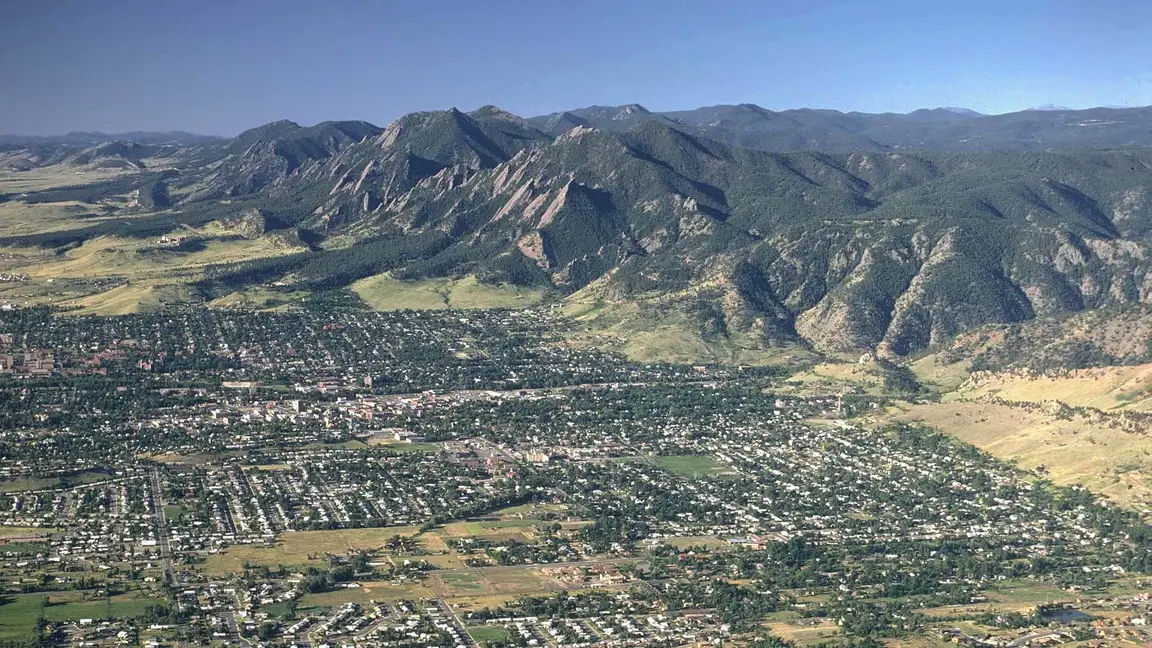

Sellers call us and say the same sentence, almost word for word: “I think my value is in the land.”
They’re usually right. And they’ve usually just spent an hour reading articles that all end the same way — hire an agent, list it, wait. Every one of those articles was written by somebody who isn’t going to buy the house.
We are. Boulder Home Buyers is the buying side of a local construction company. Our sister company, Janis Development, designs and builds new homes in Boulder County. When we make an offer on an older house or a buildable lot, there’s no one in the middle taking a cut — we’re the end buyer. The next people on that property are our crew.
That changes the math. It also gives you choices most sellers never hear about — because there isn’t just one way to sell a lot to a builder. There are three, and the right one comes down to how much of a hurry you’re in.
Three Ways to Sell the Same Lot
Here’s the part nobody explains: the price of your property isn’t one number. It moves with the timeline you can live with.
1. Cash now — certain, fast, lowest of the three
You close as-is on your date, in as little as 3 days. No repairs, no cleanout, no showings, no financing that can fall through. You take the money and you’re done.
This is the right answer for most people who call us — an estate to settle, a move that can’t wait, a rental you’re tired of, a house you inherited from two states away. Certainty is worth something real, and this is the option that delivers it.
It’s also the lowest number of the three, because we’re taking on all of the risk and all of the wait.
2. Wait for permits — get paid more for your patience
This is the option almost nobody knows exists.
Here’s our problem as a builder: we can’t put a shovel in the ground until the city approves plans and issues permits. On a Boulder new build, that runs 6 to 12 months in our experience — longer if the demolition application gets referred to the Landmarks Board. That’s a long time to own a property we can’t build on, with taxes, insurance, and interest running the whole time.
So the most valuable thing a seller can give us isn’t a lower price. It’s time.
If you’re not in a rush, we can go under contract now and close after permits are approved. You keep the property in the meantime — in many cases you keep living in it — and because you’ve taken our biggest risk off the table, the number goes up.
You’re not waiting around for free. You’re selling patience, and we pay for it.
It’s the opposite of the usual cash-buyer pitch. Normally speed costs you money. Here, flexibility earns you some.
And if the house has a renter in it, this option gets even better: keep them. The property keeps paying you rent while we work through plans and permits, your tenant gets months of notice instead of a surprise, and you still collect the higher price at closing. Some of the easiest deals we’ve done looked exactly like this — a landlord who was done, a tenant who needed time, and a builder who couldn’t start yet anyway.
Who it fits: you want the higher number, you don’t need the money by a certain date, and you’d rather sit tight — or keep collecting rent — than move twice.
3. Partner in the project — for the rare seller who wants to
There’s a third path, and we’d rather mention it honestly than pretend it doesn’t exist: instead of cashing out entirely, some sellers roll part of their equity into the build and share in the result when the finished home sells.
We’re not going to put projections on a web page. This is an investment, not a sale — the upside isn’t guaranteed, your money is tied up for the length of a construction project, and it’s genuinely not right for most people. It fits a seller who knows the location cold, believes in what’s getting built there, and can afford for it not to go perfectly.
If that sounds like you, say so on the call and we’ll walk through how it would work on your specific property. If it doesn’t, the first two options are where almost everybody lands — and there’s nothing wrong with that.
How a Builder Actually Prices Your Lot
You should be able to check our math. Here’s the whole method — it isn’t complicated, and it isn’t a secret.
A builder doesn’t start with what your house is worth. A builder starts at the end and works backward.
- What will the finished home sell for on this street? Not the best comp in Boulder — the realistic one for that block, that lot, those views.
- Subtract what it costs to build it. Demolition, excavation, foundation, framing, mechanicals, finishes.
- Subtract the soft costs. Architecture, engineering, survey, soils report, permit and tap fees, insurance, interest during construction, the commissions on the sale at the end.
- Subtract a margin for the risk of committing to a two-year project where nobody knows what the market looks like at the finish line.
- What’s left is what the land is worth. That’s your offer.
Builders call this residual land value. It’s why two houses that look identical can be worth very different amounts to us — and why our number sometimes beats what a flipper can pay by a wide margin, and sometimes doesn’t come close.
What moves the number up: lot width (a 70-foot lot is worth meaningfully more than a 40-foot one), an alley behind the property, views, a flat buildable site, clean soils, utilities at the street, and zoning that allows the size of home the block supports.
What moves it down: steep or awkward ground, expansive soils that need an engineered foundation, floodplain, easements through the buildable area, solar-access setbacks that squeeze the second floor, a shared driveway, or a demolition review that could add months.
And what mostly doesn’t matter: the condition of the house. The kitchen, the roof, the carpet, the list of deferred maintenance you’ve been apologizing for on the phone — if the land math wins, none of it changes the offer. Please don’t spend a dollar fixing anything.
Is My House a Teardown? An Honest Test
Not every older home is worth more as a lot, and we’ll tell you when yours isn’t. A few signs that point toward land value:
- The house is small for the block. The classic Boulder version is a 900-to-1,100-square-foot post-war ranch — often no basement, sometimes no garage — on a street where the neighbors are three times its size. Too small for a renovation to pencil. The lot says something else entirely.
- The lot alone is worth more than half of what finished homes nearby sell for. When land is that big a share of the value, rebuilding usually beats remodeling.
- Everything is due at once. Roof, furnace, panel, sewer line, windows, foundation — when the whole list comes due in the same decade, a renovation stops being a renovation.
- Your neighbors already answered the question. If two or three houses on your street have come down and gone back up in the last few years, the market has spoken for your block.
And the honest other side: if your house has real character and good bones, a teardown may be the wrong answer — and we’ll say so. We do full gut rehabs too, and there are streets where bringing an old house back is both the better outcome and the better number. We price both paths and tell you which one won.
We’re the Builder — Here’s the Work
Anyone can put “we buy teardowns” on a website. Fewer people can show you the finished houses.
Janis Development has built and rebuilt across Boulder County — 422 and 428 Alpine Avenue, 3280 6th Street, 785 Northstar, 2275 Hillsdale, 600 Hawthorn, 2700 15th Street, 3310 Heidelberg, 206 Bowen in Longmont. Some were scrapes that became new homes. Others, like 1625 Mariposa and 2950 Juilliard, were tired houses on good streets that we took apart and brought back.
Dave Janis has been doing this in Boulder County for more than 20 years and lives in Longmont. When he walks your property, the person quoting the number is the same person who will pull the permit, hire the crew, and stand in the mud all winter. No acquisitions rep, no committee, no assignment fee hiding between you and whoever actually shows up.
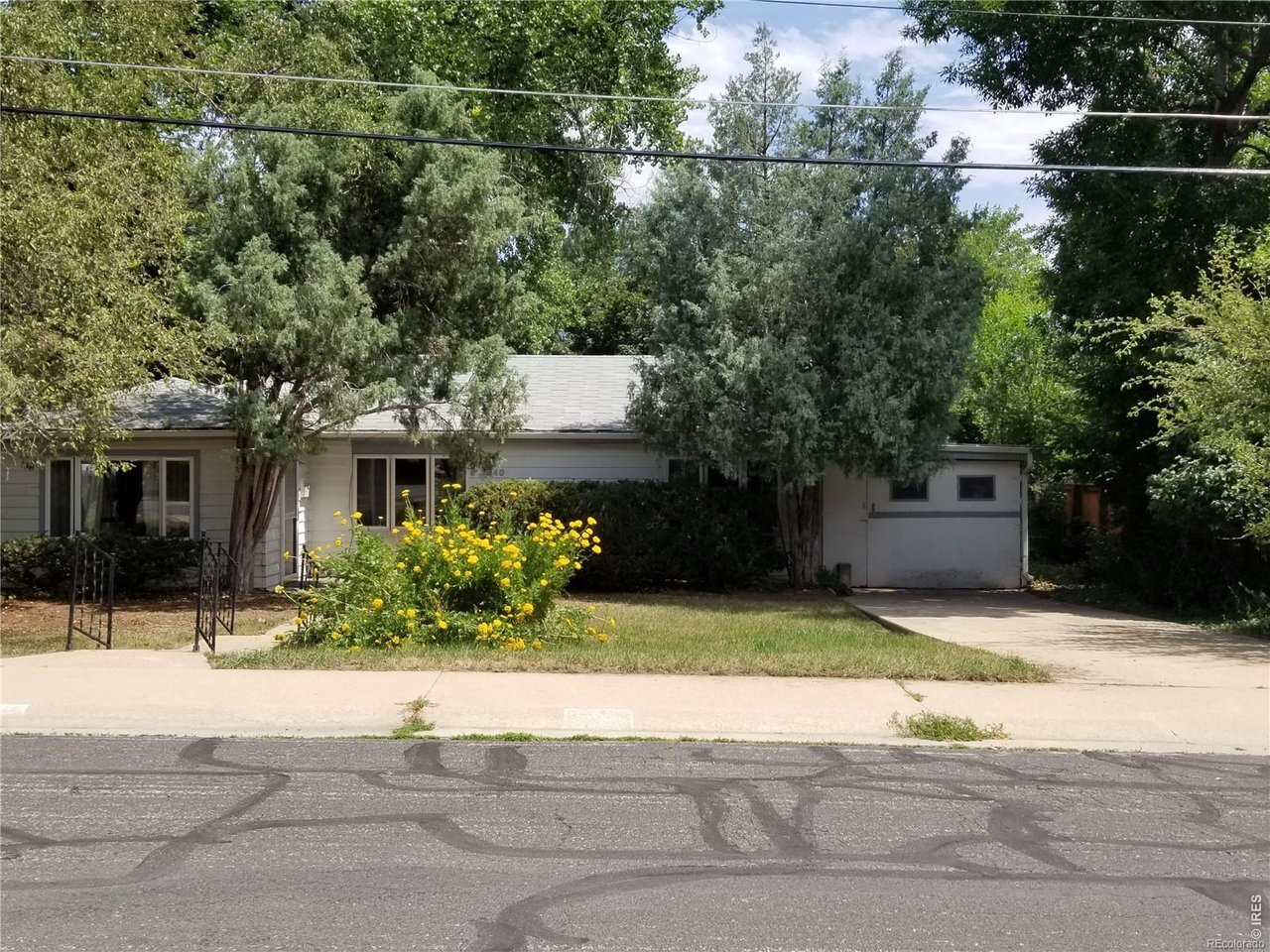
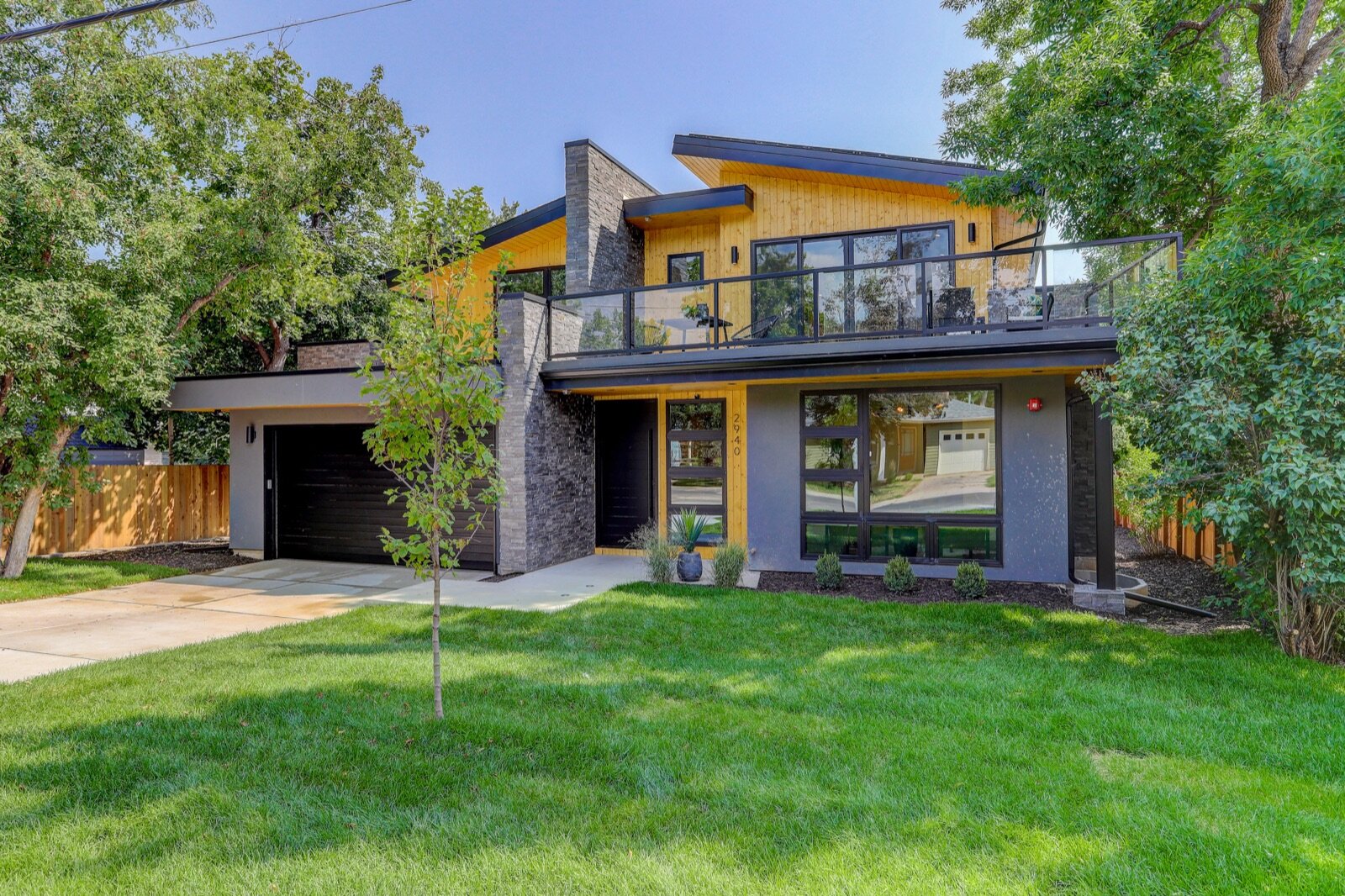
Here is one of them. Same lot, same street — the house we bought, and the house we built in its place.
What to Ask Any Builder Who Calls You
If your lot looks buildable, you’ll get calls. Some of those callers are builders. Many aren’t — they want to tie up your property under contract and sell that contract to somebody else. Five questions sort them out fast, and we’d rather you ask us all five:
- “Are you building on it yourself, or selling my contract to someone else?” The answer should be immediate and specific.
- “Show me three houses you’ve finished in this county.” Addresses, not stock photos.
- “How much earnest money, and when does it go hard?” Real buyers put up real money.
- “What contingencies are in your offer, and how long do they run?” A long, vague feasibility period is how a shaky buyer keeps the right to walk while your property sits off the market.
- “What happens if the city says no?” Ask who eats that risk. On our contracts, it’s us.
This isn’t theoretical. When an inexperienced buyer figures out mid-contract that they can’t build what they planned, you’re the one who pays — weeks or months off the market, a dead deal, and a property that now looks shopworn to the next buyer.
What About Boulder’s Demolition Review?
If your house is more than 50 years old — and nearly every teardown-era house in Boulder is by now — the city requires a historic preservation review before anything comes down. The Landmarks Design Review Committee looks at whether the building might be eligible for landmark designation. Most applications clear that step. Some get referred to the full Landmarks Board, which can approve the demolition or place a stay of up to 180 days to explore alternatives. In a historic district like Mapleton Hill, the rules are tighter still.
A city-commissioned study reported in 2025 counted 139 demolition waivers issued since 2019 — so this is a well-worn path, not an exotic one.
Here’s the part that matters to you: that risk is ours, not yours. We’ve been through the review on our own projects, we budget the time into every offer, and a possible Landmarks referral doesn’t reduce what we can pay you. If you take the cash-now option, you’re closed and gone long before any of it starts.
Boulder County’s Market Right Now — June 2026
Here’s the market behind everything on this page, from the MLS as of June 2026: inventory across the region has nearly doubled since June 2023 — 22,314 homes for sale, up 98% — and the median time to sell has doubled with it, from 16 days to 32. In every city we buy in, the typical sale now closes below the original asking price. Boulder proper sits at 5.5 months of supply, the slowest supply picture it has seen in years.
For a teardown or a lot, that cuts two ways. The retail buyer pool for a seven-figure property that needs to come down was always thin, and a slow market thins it further — which is why these properties sit on the MLS while the carrying costs run. But a slower market doesn’t shrink our offer the way it shrinks a flipper’s: the finished-home price we’re building toward is two years out either way, and we price it conservatively in any market. It also makes the wait-for-permits option easier to say yes to — we’re not racing anyone, and your patience is still worth money.
Source: IRES MLS, June 2026. We refresh these numbers quarterly.
Where We Buy
We buy houses, teardowns, and lots throughout Boulder County: Boulder, Longmont, Louisville, and Lafayette, plus Superior, Erie, Niwot, Gunbarrel, Hygiene, and the unincorporated county.
We’ll look at anything — in-town scrapes, acreage, raw lots. In Boulder we pay the most attention to lots with views west of Broadway and the older ranch neighborhoods around Chautauqua, Newlands, Table Mesa, and Martin Acres. In Longmont and Louisville, the 1960s and 70s housing stock on generous lots is where the land math tends to work.
How It Works
1. Tell us about the property. Address and a rough description is enough. You don’t need a survey, a soils report, or a plan — that’s our job.
2. We do the homework. Zoning, setbacks, lot dimensions, soils, utilities, floodplain, demolition review. We run the house as a renovation and the lot as a building site, and your offer is built on whichever comes out higher.
3. You get a written offer, usually within 24 hours — and we’ll tell you which of the three paths it’s based on, and what the other two would look like.
4. You pick the date. Three days, three months, or after permits. Your call, not ours.
No commissions, no fees, no closing costs out of your pocket. The number on the offer is the number you walk away with.
Questions Boulder County Sellers Ask Us
Is my house worth more as a teardown, or should I remodel it?
It depends on how much of your property’s value is in the land. If the lot alone is worth more than half of what finished homes nearby sell for, and the house is small or needs every major system replaced, the land usually wins. We run both numbers on every property and tell you which one came out higher — including when the answer is “keep it and remodel.”
How do I find a developer to buy my house?
Most articles say hire an agent and list it. That works, but it puts a commission and a marketing timeline between you and the buyer. The direct route is to call a builder who’s actively buying in your area and ask them to price it. In Boulder County, that’s us — (303) 442-0505.
Do I have to demolish the house before selling it?
No — please don’t. Demolition is expensive, it needs its own permits and historic review, and it can leave you carrying a vacant lot. Sell it standing. The teardown is our cost and our job.
Do I need to fix anything, clean it out, or get an inspection?
No to all three. Leave what you don’t want — furniture, the junk in the garage, the shed you never emptied. If we’re building on the lot it’s all coming out anyway, and even on a rehab the cleanout is ours.
How long does it take a builder to get permits in Boulder?
For a new home, expect roughly 6 to 12 months from contract to permits in hand — longer if the demolition application goes to the Landmarks Board. This only affects your timeline if you choose the wait-for-permits option. With a straight cash sale you close in as little as 3 days, and the permit process is entirely our problem.
Can I stay in the house until you’re ready to build?
Often, yes. Since we usually can’t start for months anyway, a delayed close or a rent-back after closing costs us very little and can save you a whole extra move. Tell us what would make your life easier and we’ll try to build the deal around it.
Will you pay more than a flipper?
Sometimes considerably more, sometimes not at all — it depends on which math wins. A flipper can only price your house as a renovation. Because we also build, we can price the lot as a building site. When the land number is the bigger one, we can go places a renovation buyer can’t. When the house is genuinely worth restoring, a good flipper might beat us — and we’ll tell you that too.
What if my lot is in the county, or has a well and septic?
That’s fine, we buy those. County properties come with their own wrinkles — septic transfer requirements, well permits, access easements, a different building department — and we’ve dealt with all of them. It doesn’t scare us off, and it doesn’t automatically lower the number.
Find Out What Your Land Is Worth
If you’ve been wondering whether your value is in the house or in the ground under it, one conversation will tell you. We’ll run both numbers and show you all three ways you could sell.
Call or text Dave at (303) 442-0505, or fill out the form below. No pressure, no obligation, and nobody from a call center will chase you afterward.
Sell Your House Direct As-Is, No Commissions.
What Is Your Boulder Home Worth? Get An Offer In Under 24 Hours In Most Cases
We buy houses in Boulder in ANY CONDITION in. NO Fees. NO Commissions. And Absolutely No Obligation. Get Started And Close On Your Home In As Little as 3 Days. Get The Easy Process Started By Calling Us At 303-442-0505.